
What Causes Dry Eyes and How Can You Treat Them?
Dry eye is a common condition that occurs when your eyes do not produce enough tears or when tears evaporate too quickly. It may cause discomfort, irritation and fluctuating vision, affecting your daily activities.
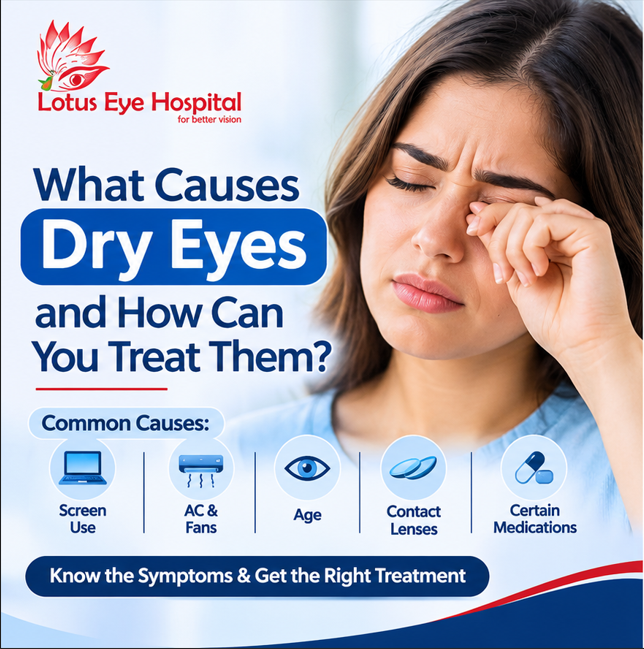
Common Causes of Dry Eyes
-
Prolonged screen use: Reduced blinking while using computers, phones and tablets can contribute to tear evaporation.
-
Air conditioning and fans: Airflow and dry environments may worsen symptoms.
-
Age-related changes: Tear production and tear quality can change with age.
-
Contact lenses: Some contact lens wearers experience dryness or irritation.
-
Certain medications: Some medicines may contribute to dry eye symptoms.
-
Eyelid or tear-film problems: Inflammation and problems with the oil-producing glands in the eyelids may affect tear quality.
Symptoms of Dry Eyes
Common symptoms include burning, itching, redness, a gritty sensation, excessive watering and intermittent blurry vision. Watery eyes can occur because irritation triggers reflex tearing.
How Can Dry Eyes Be Managed?
Treatment depends on the cause and severity. Taking regular breaks during screen use, blinking fully, avoiding direct airflow and maintaining suitable indoor humidity may help. An eye-care professional may recommend lubricating eye drops or other treatments after examining your eyes. Persistent symptoms may require evaluation for eyelid inflammation or other underlying conditions. Do not use antibiotic or steroid eye drops without medical advice.
When Should You Consult an Eye Specialist?
Seek an eye examination if dryness continues, affects your vision or does not improve with simple measures. Severe pain, marked redness, light sensitivity or sudden vision changes require urgent assessment.
Dry Eye Evaluation in Lotus Eye Hospital, Mumbai
If you are experiencing persistent dry eye symptoms, Lotus Eye Hospital, Juhu, Mumbai, can be contacted to enquire about an eye examination and suitable eye-care services. An appropriate assessment can help identify contributing factors and guide treatment.